
Construction Contingency: How Much to Include and How to Track It So It Does Not Disappear
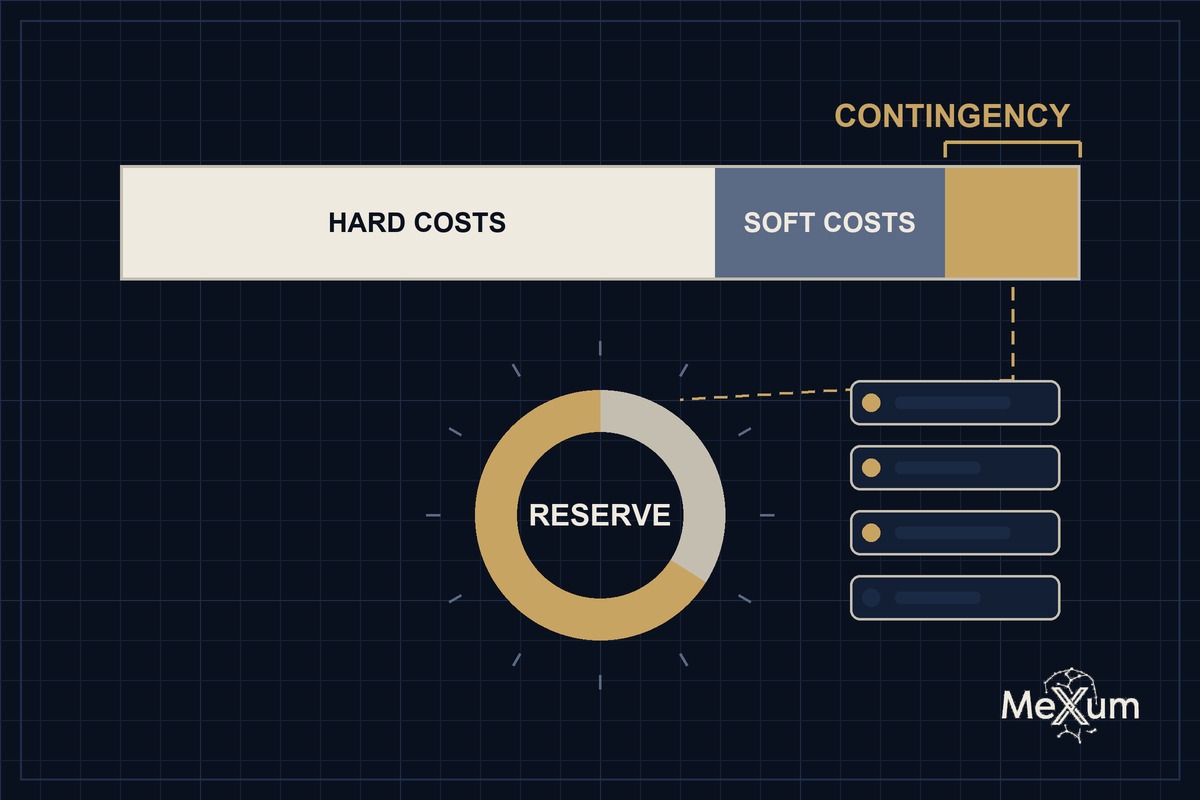
Contingency is the line in a construction budget that exists for the things nobody could price: a soil condition that looks different once the excavator is in the ground, a wall that turns out to have old wiring behind it, a material that jumps in price between bid and purchase.
It is also the line that people quietly spend on things that were never a surprise: an upgrade the owner wanted, a missing item from the estimate, a design change. By the middle of the project the reserve is gone and the real surprises are still ahead. This article explains how to size a contingency and how to keep it for what it is for.
Contingency, allowance and change order are not the same
- Contingency covers unforeseen cost. It is a reserve, drawn only when something unexpected happens.
- An allowance is a known item with an unknown price, like flooring that hasn't been picked.
- A change order is a documented change to the scope or price of the contract, whether the money comes from the contingency or from a new addition.
Mixing the three is how budgets lose track. If a known upgrade is paid from the contingency, the reserve shrinks without any surprise having occurred.
How much contingency is typical
There is no single correct number. These ranges are rules of thumb that depend on how complete the design is and how much is unknown:
- Well-defined new construction with a complete design: commonly in the range of 5% to 10% of construction cost.
- Early-stage budgets, or work with many unknowns: often more, sometimes 15% to 20% or higher.
- Renovation of an older building: typically toward the upper end, because hidden conditions are more likely.
The better the drawings and the estimate, the less the budget needs to rely on contingency. If the estimate is vague, a larger reserve is not a substitute for fixing it.
Where the contingency lives
Check whose contingency it is. An owner's contingency is held by the owner (or the lender) and released against documented need. A contractor's contingency is part of the contractor's price. Many projects have both, and the problem starts when the same risk is covered twice: once in a contingency line and again inside padded unit prices.
When you review an estimate, look for any line named contingency, escalation, risk or "miscellaneous", and check whether the same exposure is already priced elsewhere.
How to track it
A simple log is enough, and it should exist from day one:
- Starting amount and its basis (percentage, which budget it applies to).
- Each draw: date, amount, what happened, who approved it.
- Link to a change order for every draw, so the paper trail matches the money.
- Remaining balance shown next to the percentage of work completed.
A useful sanity check: if 30% of the contingency is spent when 30% of the work is done, ask what is left for the 70% still to come.
Rules that keep it intact
- Use it only for genuinely unforeseen conditions, not for owner upgrades or items missing from the estimate. Those are scope changes and belong in change orders.
- Require written approval for every draw.
- Review the balance at every progress payment, not only at the end.
- Return unspent contingency according to the contract, and make sure the contract says how.
For lenders
Lenders usually watch contingency closely because it is the buffer between a surprise and a funding gap. If a draw request cites "contingency" for something that was visibly in the plans, that is worth a question before releasing funds.
Frequently asked questions
What is contingency in a construction budget?
A reserve for unforeseen costs. It is not meant for planned items or owner upgrades.
How much should I include?
It depends on design completeness and project type. Rules of thumb are about 5% to 10% for well-defined new builds and higher for early budgets or older buildings.
What is the difference between contingency and a change order?
Contingency is the reserve. A change order is the document that records a change to scope or price, and it is the paper trail for any draw.
Can someone check my estimate for hidden or duplicated contingency?
You can upload the estimate and contract to MEXUM: the written report arrives within 24 hours and flags duplicated items, missing scope and risky terms, each tied to the exact line. It is an independent document review, not a substitute for your own advisors.